

Exhibition 16 May - 12 June 2025
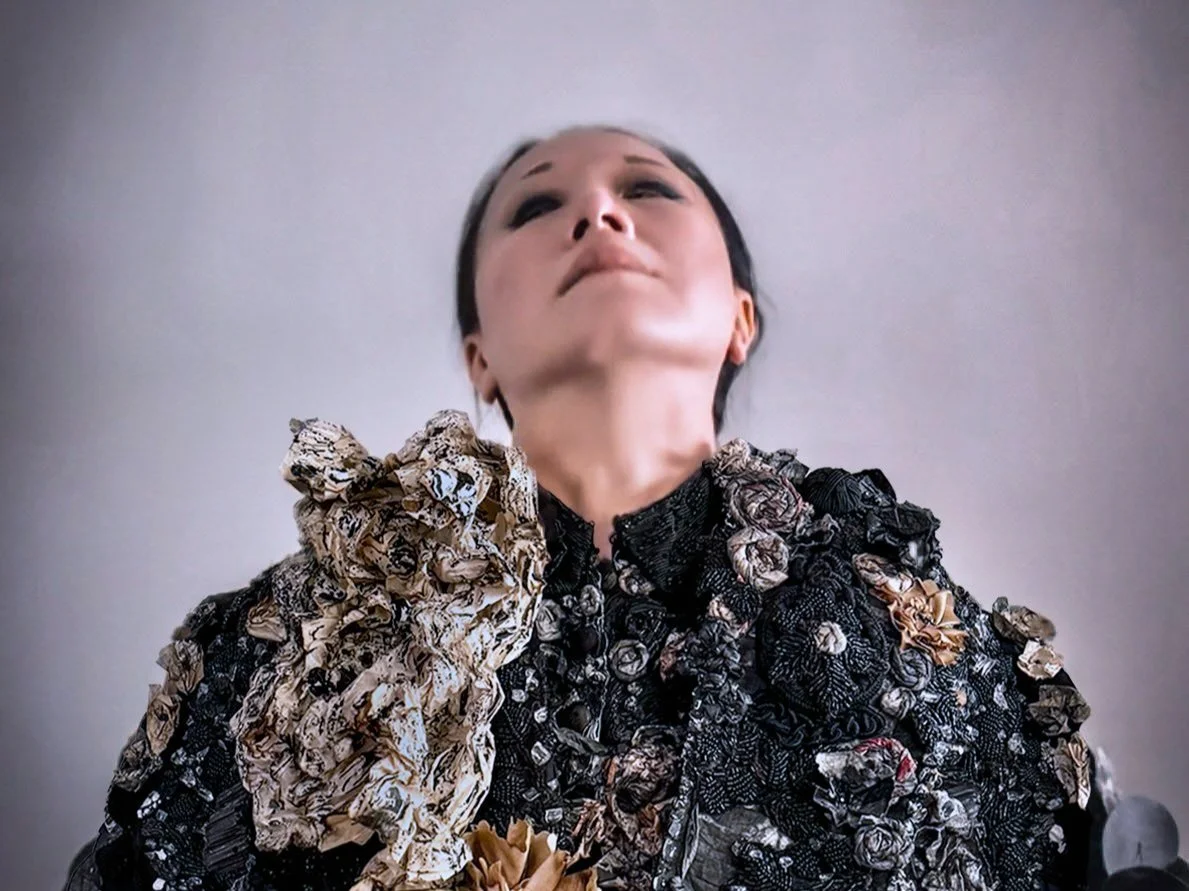
This costume work, The Mourning, marks the commencement of my creative journey in a series titled The Fire Surround. Over two years, I meticulously altered a century-old Edwardian coat from England for a theatrical fantasy, in response to the reality of the atrocities unfolding in the world. I sewed on exquisite and textured handmade embellishments. These include papier-mâché flowers, old pottery shards, glass beads and silk remnants saved from Victorian jackets and parasols. Both sleeves are decorated with ink-paper garlands inspired by the empty pots I observed in famine-stricken conflict zones. The coat’s back features a Victorian cotton nightdress for a child strategically placed as a poignant reminder of the responsibility we bear in shaping the child’s future. Transforming this coat and working with fragile materials during the meditative crafting process allows me to empathise with the collective grief and connect with others on a deeper level fostering a sense of shared humanity. On the side it features a self-portrait of me wearing the mourning coat. This symbolises human perseverance. I gaze upwards, experiencing a moment of transition or elevation.
This exhibition was self-organised, curated and presented in an unoccupied shop on Caine Road, Mid Levels in Hong Kong.
《哀。渡》一作標誌著The Fire Surround系列創作旅程的啟程。在戲劇性的幻想下我在一件從百年歷史英國愛德華時代的長袍上花了兩年多的時間密密地進行改造,縫製了精緻而富有質感的全手造裝飾,以回應世界上暴行正在發生的現實。這些裝飾包括紙漿花、舊陶器碎片,以及從維多利亞時代絲綢外套和陽傘上保存下來的布碎和玻璃珠。兩隻袖子上都裝飾著水墨紙串,靈感來自遭受飢荒的衝突地區照片上的空鍋。長袍背面巧妙地縫上了充滿符號的維多利亞時代的兒童睡袍,似在提醒我們肩負著塑造未來世代的責任。透過冥想式的創作過程,與脆弱的材料打交道,彷佛讓我能夠感同身受地體會到集體的哀傷,並建立更深層次的聯繫,培養共享的人性。而旁邊的肖像攝影作品寓意著堅韌的精神,我抬頭仰望,彷似正經歷著轉變及昇華。
展覽在香港半山堅道的一間空置店舖內由藝術家策展獨立舉辦。
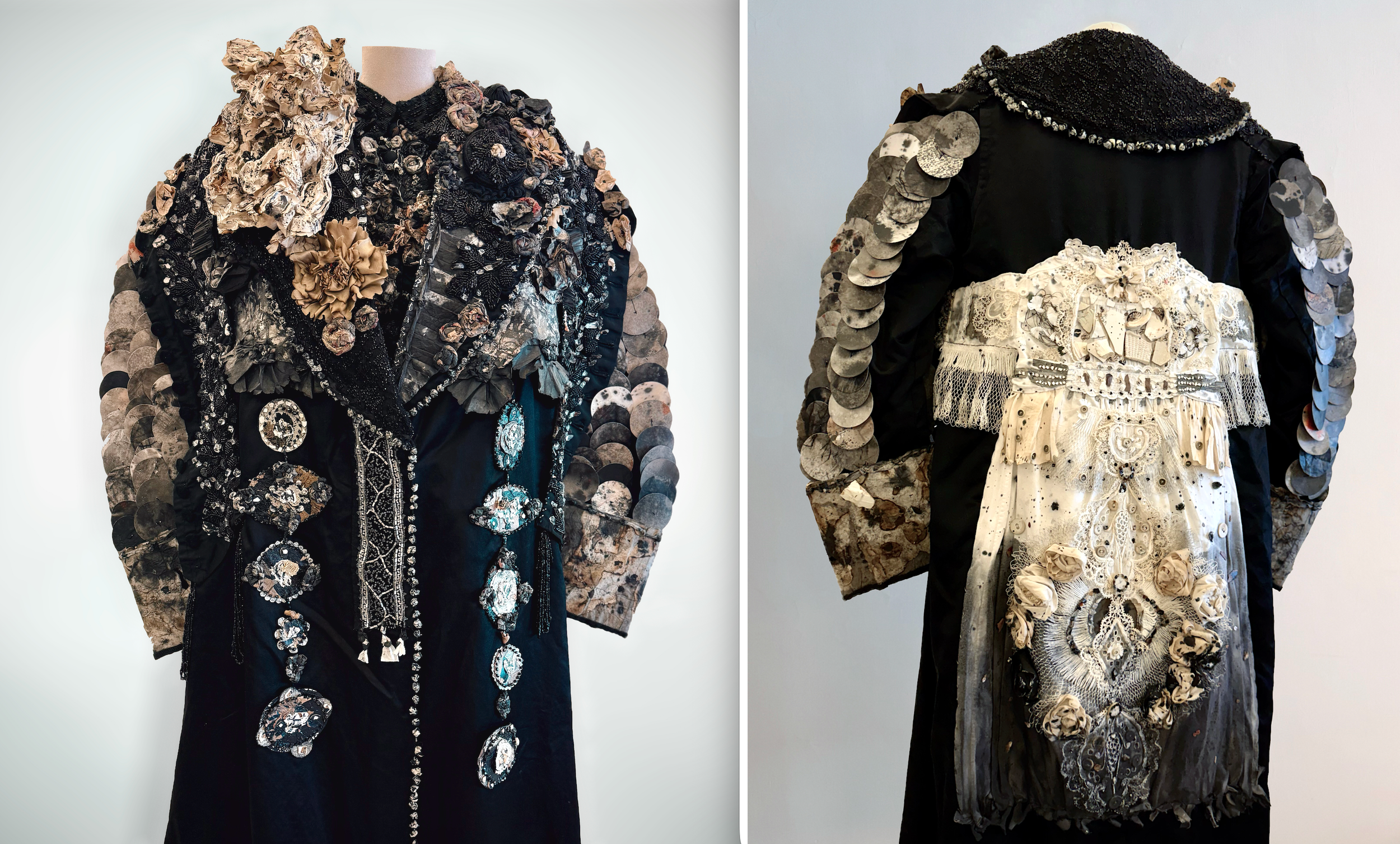
The Mourning, Claire Lee, 2025, Mixed media costume installation, Unique piece, 122(L) x 89(W) x 10(D) cm (flat measurements)

The Mourning, Claire Lee, 2025, Self-portrait, Giclée print on fine art paper, Limited Edition of 7, 70(H) x 50(W) cm
MAKING PROCESS
Documentation: Making of "The Mourning" - Part 1 - Beginning
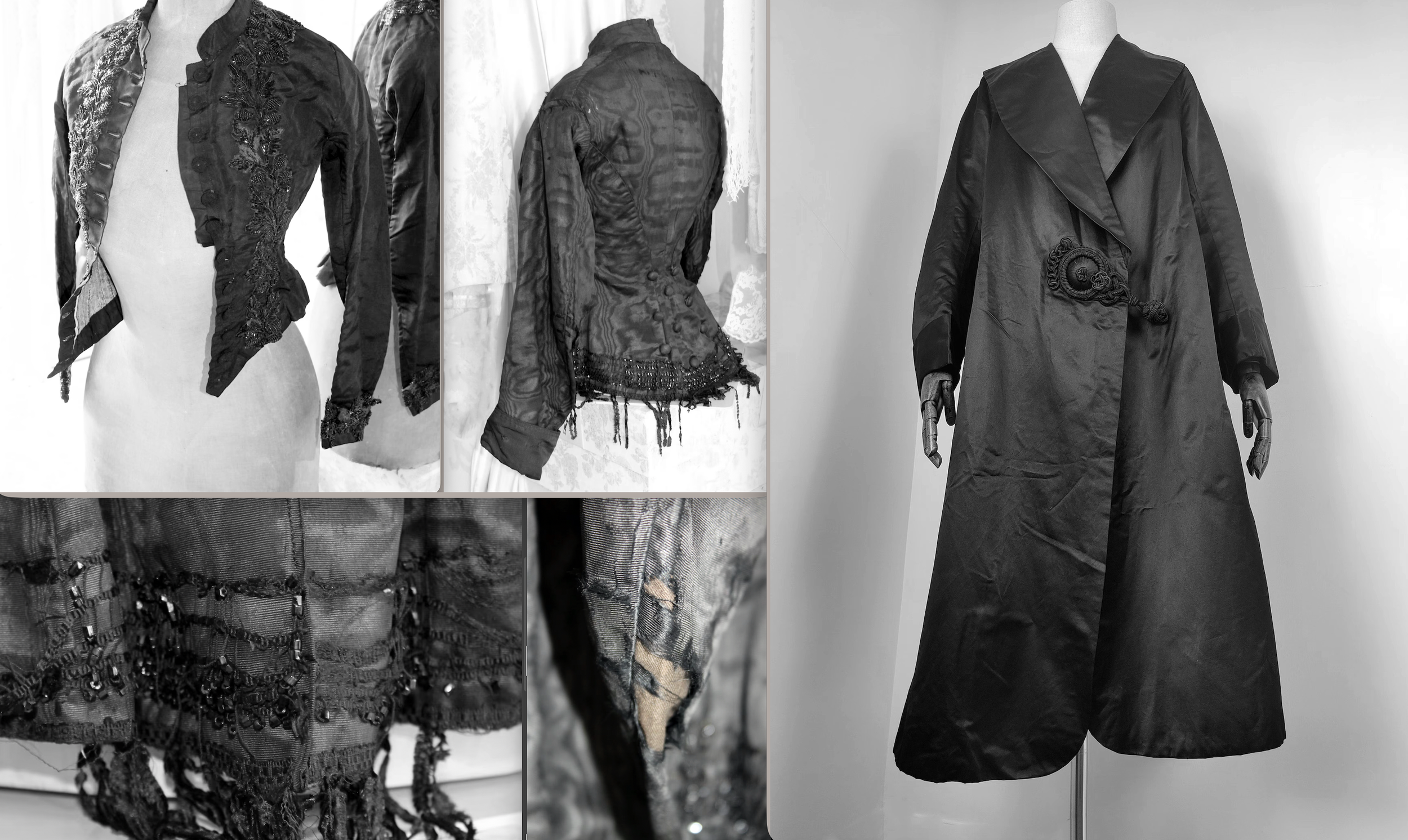
In mid 2023, I acquired a beautiful Edwardian black silk coat and two black moire taffeta jackets from the Victorian era in the UK. Victorian mourning, dating back to the late 1800s, originated with Queen Victoria’s black crepe, jet and onyx garments. These set a Western precedent for mourning attire.
The century-old garment’s fabric is worn and damaged, with shattered patches, split shoulder seams, torn trimmings and missing jet beads. Despite its condition, it’s a beautiful social and personal artefact.
As I touched the fabric, a vision of a mythical bird consumed by fire yet rising from its ashes filled my mind. I already imagined myself wearing the coat and gazing upwards even before I started crafting it into my version of a mourning costume.
Amidst global geopolitical conflicts and unfolding atrocities, I embarked on a makeover. This reality, coupled with the suffering I witnessed, inspired me to transform the coat. It resonated with my empathy for collective grief and explored expressions of humility and human perseverance.
Making of "The Mourning" - Part 2 - Waistcoat
I began working on the Victorian jackets. I repaired some splits and damage as they were quite worn and fragile. The sleeves and back were removed from one jacket to allow for later reuse. I decided to transform it into a waistcoat, the first layer under the coat, which I’d work on next.
My aim was to shift the traditional mourning posture from a quiet dismissive stance to a dramatic expression of emotion on the black fabric, incorporating intricate details and textures.
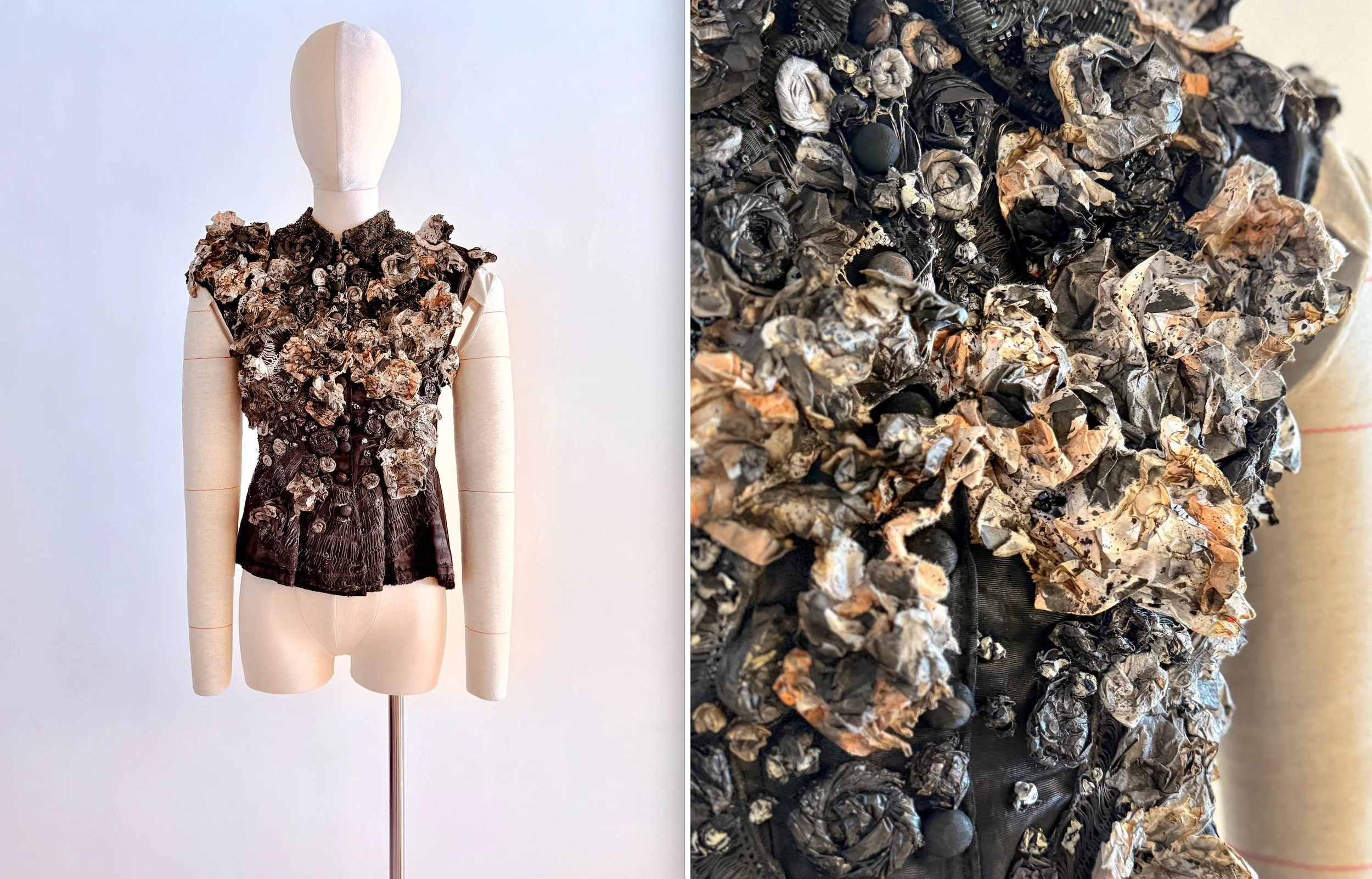
I prepared the jacket with various decorations. I began by drawing ink on Xuan paper and shaping it into flowers, then sewing them with jet beads onto the taffeta, which was prepared with old netted white dollies treated with Chinese ink to deepen the visual impression. I also added small flowers crafted from remnants of black rubbish bags, masking tape and other discarded materials. The repetitive process of drawing sculpting and sewing was a fascinating creative experience. I’ll delve deeper into this in my next coat-making post.
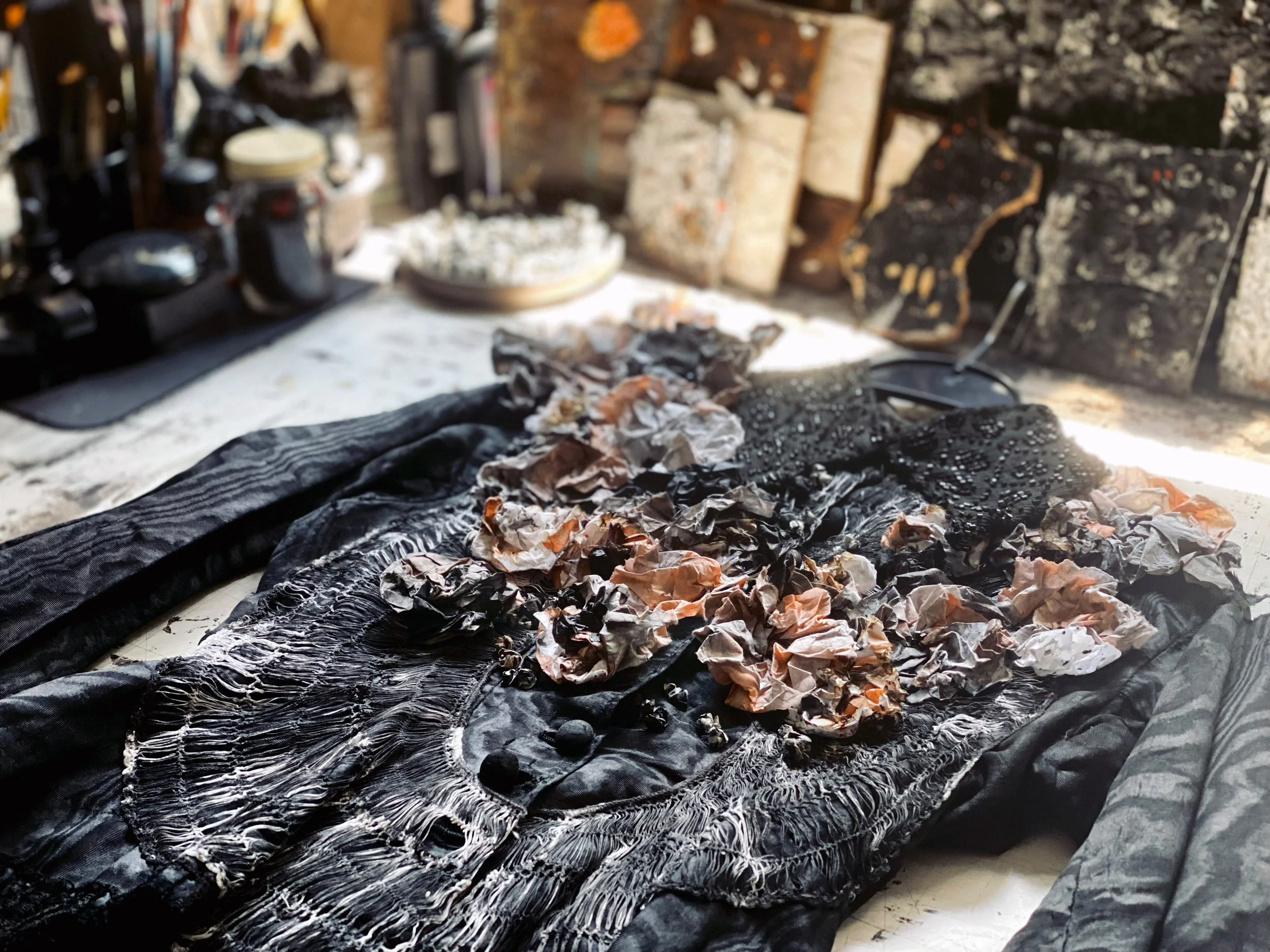
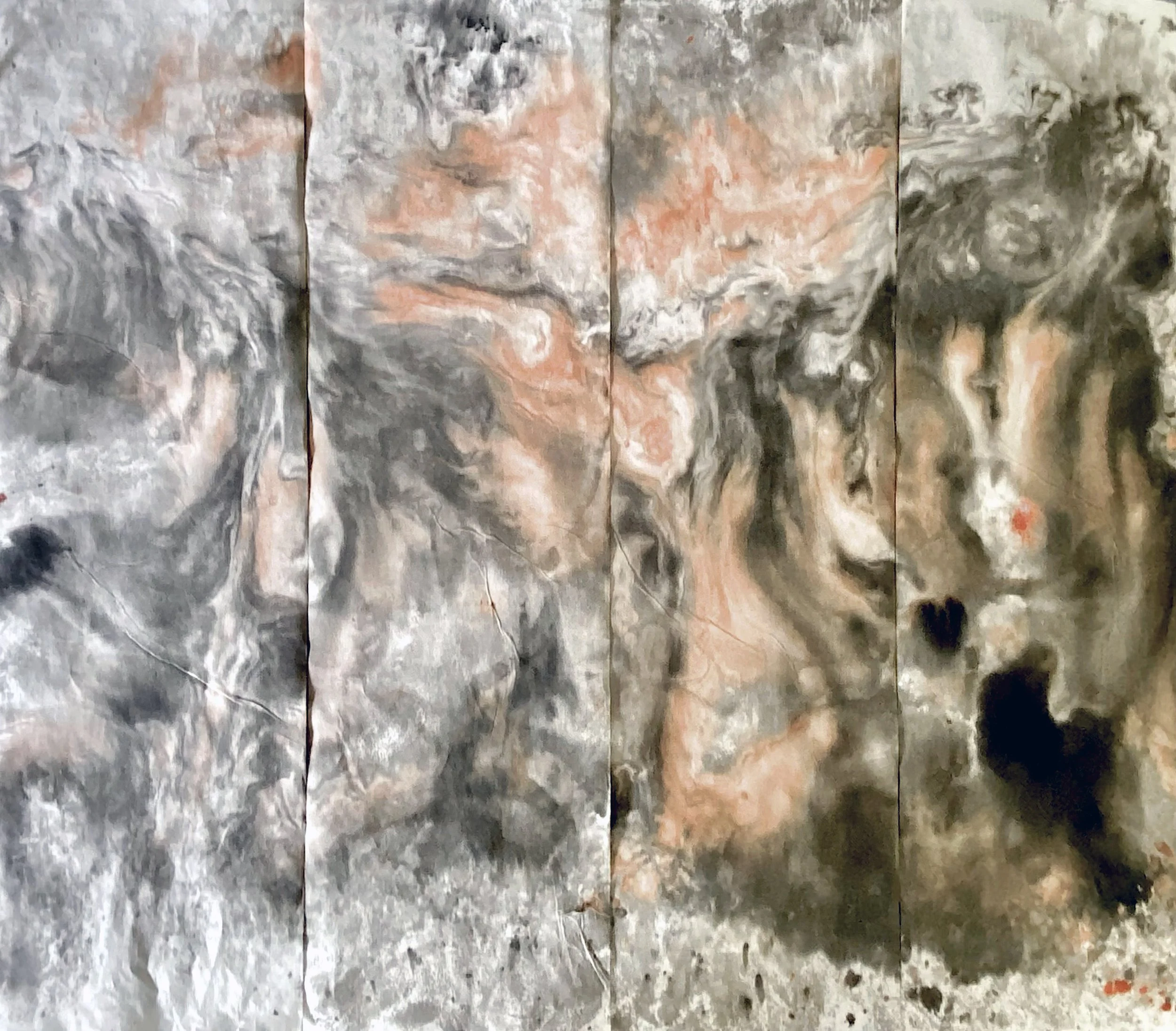
Making of "The Mourning" - Part 3 - Old and New
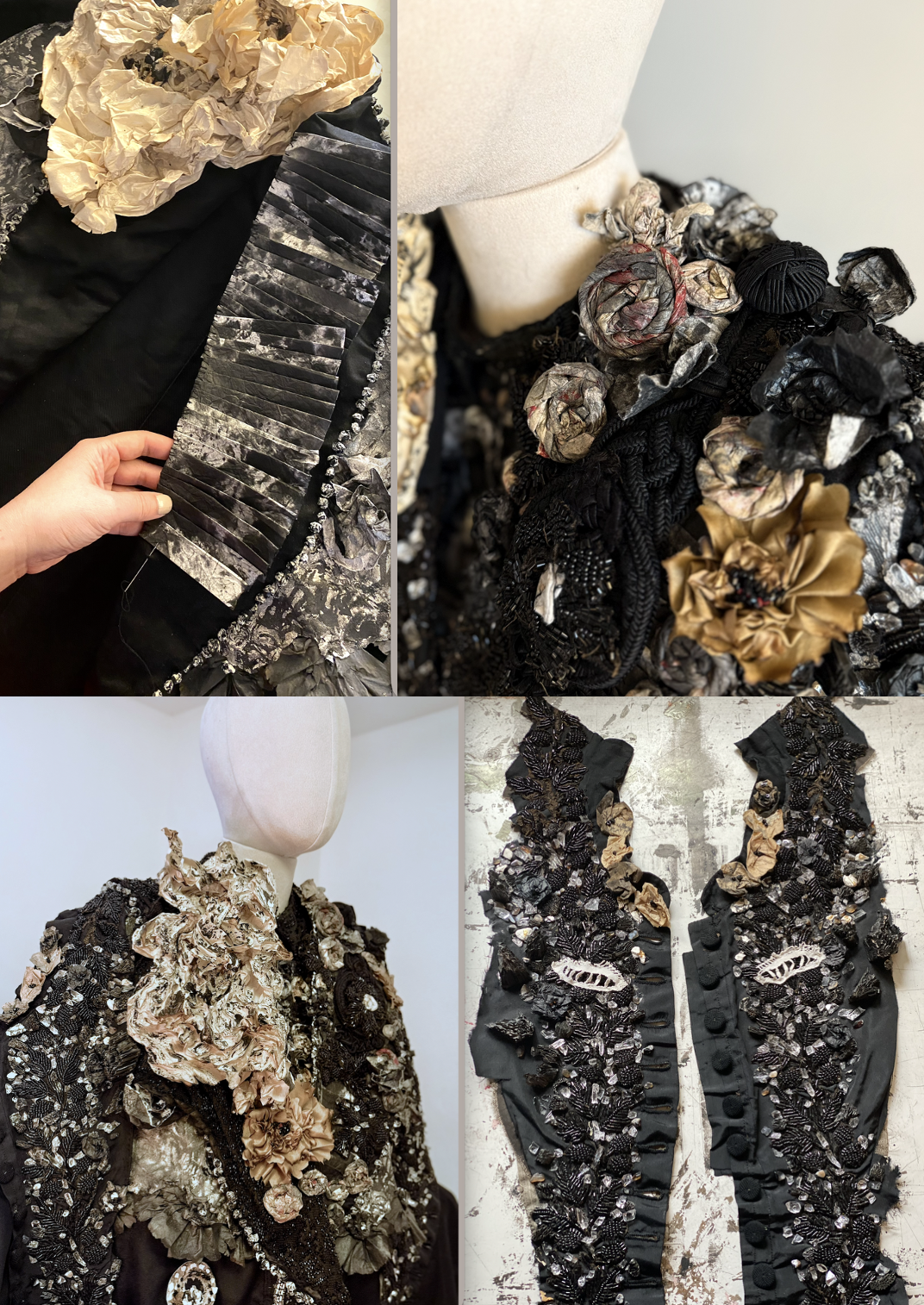
Inside, a sense of disarray and destruction permeated the space. My work consisted of contemporary pieces carefully placed among a hundred-year-old collection of jet beads and trimmings. The pictures show the materials I used on the coat. The broken glass pieces are contemporary and are placed between the antique jet beads. The large flower on the lapel is papier-mâché while the small silk flower is made from remnants of a Victorian parasol. Many of the sewn embellishments are created from paper sourced from various Chinese ink drawings I prepared beforehand.
This juxtaposition inspired me to envision landscaping a “mourning garden” on the garment. Bringing the costumes back to life was my way of reimagining and responding to the emotional quietness yet palpable intensity during times of collective loss. The expression of materiality and its chemistry embarked on its own journey, empowering the language of unspoken emotions into a potent form of self-expression. Mourning is transforming into vibrant energy.
Making of "The Mourning" - Part 4 - War Child
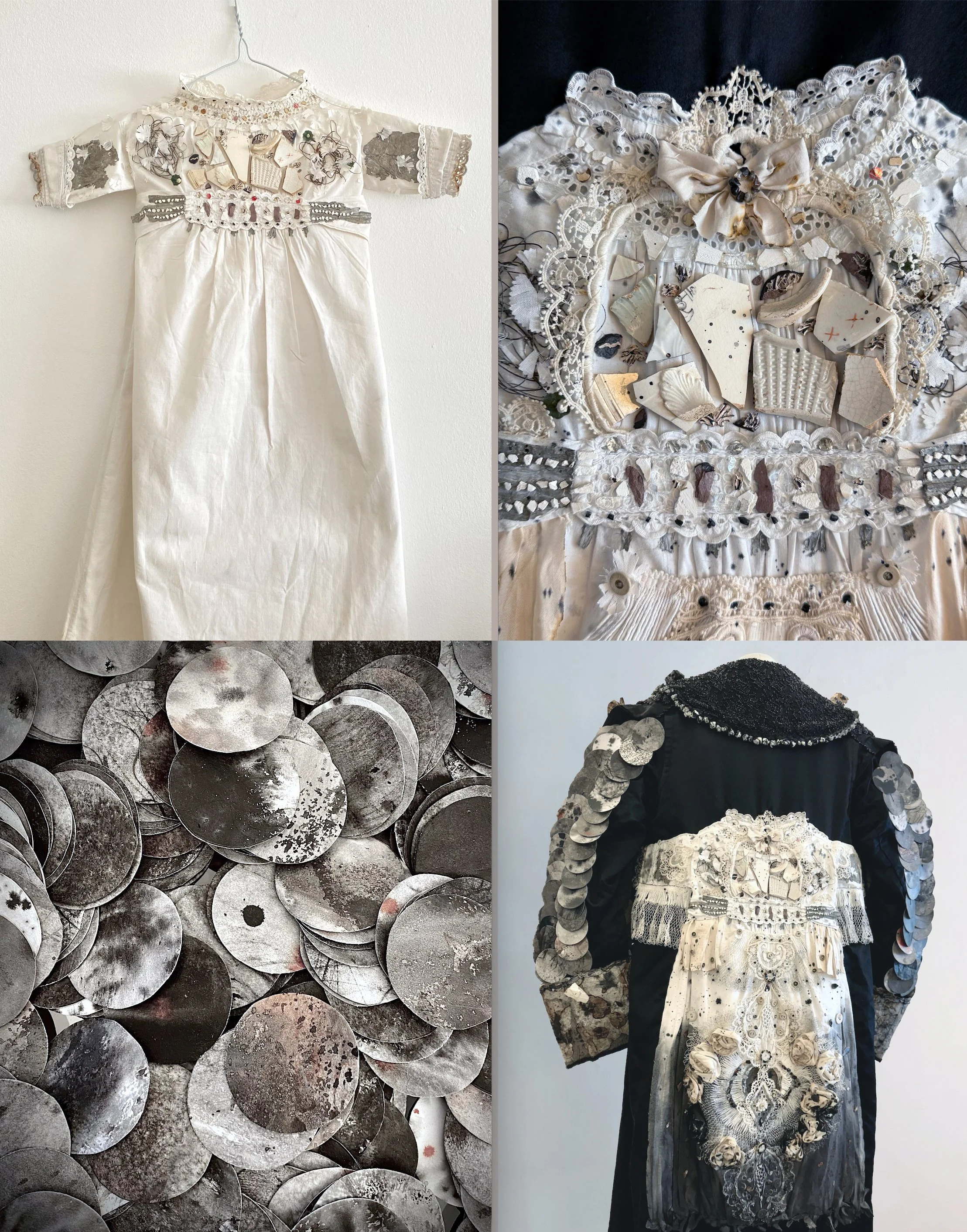
For the war child born from fire and ashes, I transformed an antique baby gown with flames and adorned it with debris and other remnants collected over the years, such as old lace doilies, a bonnet, buttons, rusted wires and pottery shards. I have created a heavy landscape of destruction on the baby gown symbolising purity and innocence. It is placed at the back of the mourning coat as a poignant reminder of the responsibility we bear as we assume the weight of the child’s future in the face of adversity and calamities.
Both sleeves of the coat are decorated with paper garlands made from my ink drawings. The circular motifs of the worn and empty cooking pots symbolise pervasive famine during wars.
Working on this coat allowed me to express my emotions and channel my energy in a positive way during this challenging period, as we all go through it and feel connected through our shared grief.
Other Works

Installation view : We Are All Migrants Through The Fire Surround, 2025. Claire Lee. Victorian cast iron fire surround, charcoals and vintage paper portraits
We are all migrants, traversing this expansive, fiery archway. This arch could symbolise a gateway, a portal, or a pivotal life event such as war, which compels individuals to undergo a profound transformation or adversity. These experiences collectively contribute to the shared narrative of humanity, prompting us to contemplate the significance of the terms “migrant” and “citizen.”


War Window I, War Window II, 2025. Claire Lee. 100 x 71 x 2.5cm Ink and charcoal on paper and linen canvas, wood frame
These two ink paintings, titled War Window, are inspired by online images of shattered or broken windows in war-torn regions. They depict glassless windows that transform into empty screens, conveying complex emotional states and life energy towards an uncertain future.

The Scar That Never Heals, 2025. Claire Lee. 62 x 44 x 2.5cm. Ink on linen, wood frame
Some wounds are so profound and extensive that they complicate and prolong the grieving process. “The Scar That Never Heals” isn’t just about physical pain; it delves into the intangible psychological trauma that leaves lasting emotional scars. The painting’s rapid vibrant ink movement conveys a dynamic sense of strength, suggesting a powerful ability to bounce back from challenges not just survive but thrive with renewed vigour.

Left and right: The Frightened Boy, 2025. Chandelier of Hope, 2025 47 x 37 x 0.5 cm. Reverse painting, ink on glass
“Chandelier of Hope” depicts the flickering movements of Chinese ink. It captures a scene of bodies dancing across a swaying candle chandelier and transcend to higher ground. The roaring fire outside transforms the night into a wild untamed wilderness.

“She’s very quiet”, 2025 40 x 60.5 x 0.8cm Ink on paper, reverse painting on glass, brass frame


REVIEWS


All images courtesy of the artist